Primebook

Primebook k

3 Mn+

3 Mn+

Users

Users

140+

140+

Countries

Countries

Designing a seamless android gaming experience for millions of desktop users.

Designing a seamless android gaming experience for millions of desktop users.

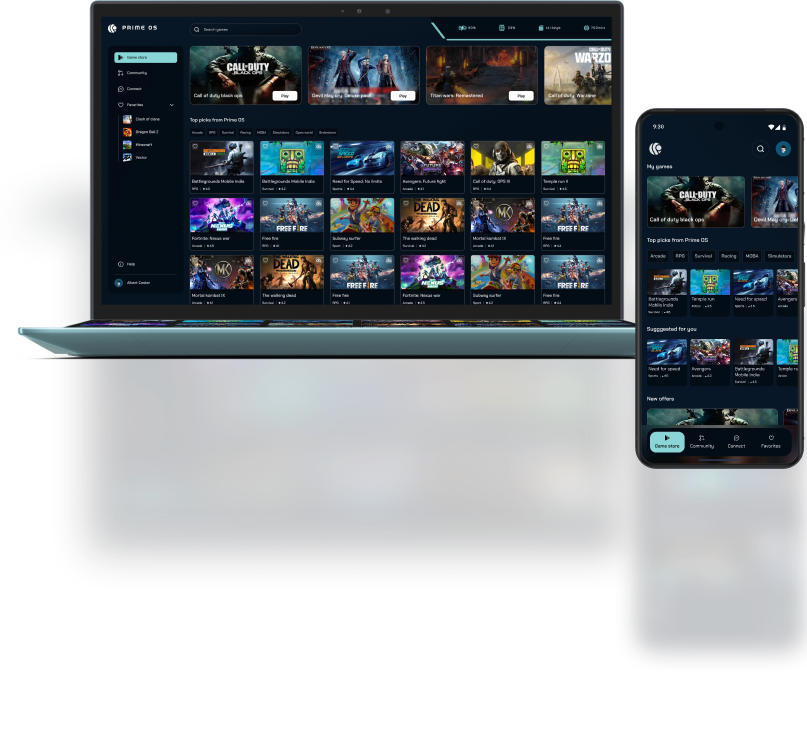
Primebook’s android powered operating system

PrimeOS is based on the Android 11 ecosystem to help individuals push the boundaries of their creativity and skills. PrimeOS combines everything you need to uplift your day-to-day management and most importantly learning and gaming. Enjoy the perfect fusion of Android in a desktop interface.

High level goals

Since this was a foundational project, we focused on big-picture goals. Our aim was to prioritize the long-term needs of users, with a plan to refine and reshape the product after gathering user insights from the MVP launch.

1.

Centralized platform to run and manage android games on desktop.

Android games on desktop let users play mobile games with better performance and control, offering seamless integration onto a larger screen with customizable settings

2.

High caliber gaming based UI.


Gamers prefer raw UIs for enhanced immersion, reduced cognitive load, and real-time feedback. Streamlined UIs improve immersion by 24%, lower cognitive load by 30%, and boost performance (Human-Computer Interaction, 2017)

Gamers prefer raw UIs for enhanced immersion, reduced cognitive load, and real-time feedback. Streamlined UIs improve immersion by 24%, lower cognitive load by 30%, and boost performance (Human-Computer Interaction, 2017)

My Role

I led the Product Design - User Experience (UX) and User Interface (UI) -  of Primebook’s Game Center as a Founding designer of this project from scratch to deployment. Primarily responsible for driving initial research, proposing the project, conceptualization, design, and delivery of key modules and feature areas, in collaboration with product manager and engineers.

Business perspective

1.

Market opportunity

Android gaming market is rapidly growing, expected to surpass $100 billion by 2025. Without a native gaming solution, PRIME OS will miss out on tapping into this lucrative user base, limiting its potential growth.

2.

User Retention

A survey of gamers showed that over 70% had tried third-party emulators but found them lacking in performance, ease of use, and control customization. By offering a platform to play Android games on desktop, PRIME OS could build a dedicated community, boosting loyalty and brand recognition

A survey of gamers showed that over 70% had tried third-party emulators but found them lacking in performance, ease of use, and control customization. By offering a platform to play Android games on desktop, PRIME OS could build a dedicated community, boosting loyalty and brand recognition.

3.

Monetization pathways

Though still in the MVP phase, future iterations of the Game Center could allow PRIME OS to explore monetization opportunities through in-game purchases, advertisements, premium gaming subscriptions, or exclusive partnerships with game developers.

4.

Opportunities from Competitor Limitations

Current solutions like BlueStacks and Nox Player are seen as resource-intensive and difficult to configure, with users frequently complaining about slow performance on lower-end PCs. This insight shaped our focus on performance optimization as a key feature for the PRIME OS Game Center.

User insights

For quantitative data collection, We surveyed young individuals through gaming community groups on Discord and Facebook, which primarily included members aged between 13 to 26.

What is your primary reason for playing Android games on a PC?

25%

25%

33%

33%

42%

42%

Better performance compared to mobile

Larger screen experience

Easier controls with keyboard/gamepad

What type of control do you prefer for playing Android games on your desktop?

15%

34%

46%

5%

Keyboard and mouse

Gamepad

Touchscreen (if device supports)

No preference

How likely are you to switch to a native game center if it provides better performance and usability than emulators?

21%

29%

38%

8%

4%

Extremely likely

Very likely

Neutral

Not likely

Not likely at all

What issues do you face most when using third-party emulators?


What issues do you face most when using third-party emulators?


What issues do you face most when using third-party emulators?


What issues do you face most when using third-party emulators?

21%

21%

30%

49%

Poor performance (lag/low frame rate)

Limited or poor control customization

Complicated setup process

User flow

The main point of the flow is to ensure that the functionality is always visible to the user, but not in an obstructive way but in conventional manner.
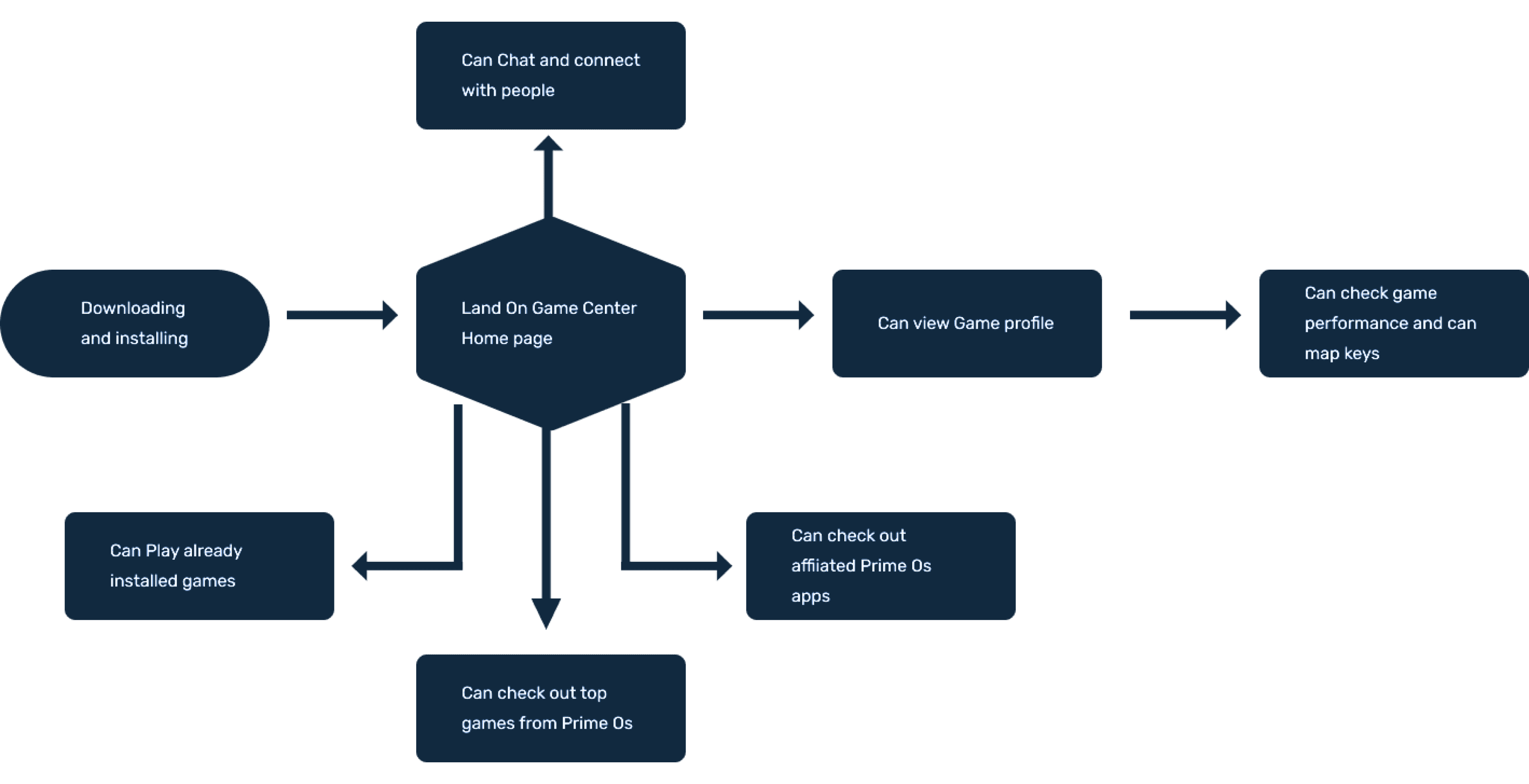
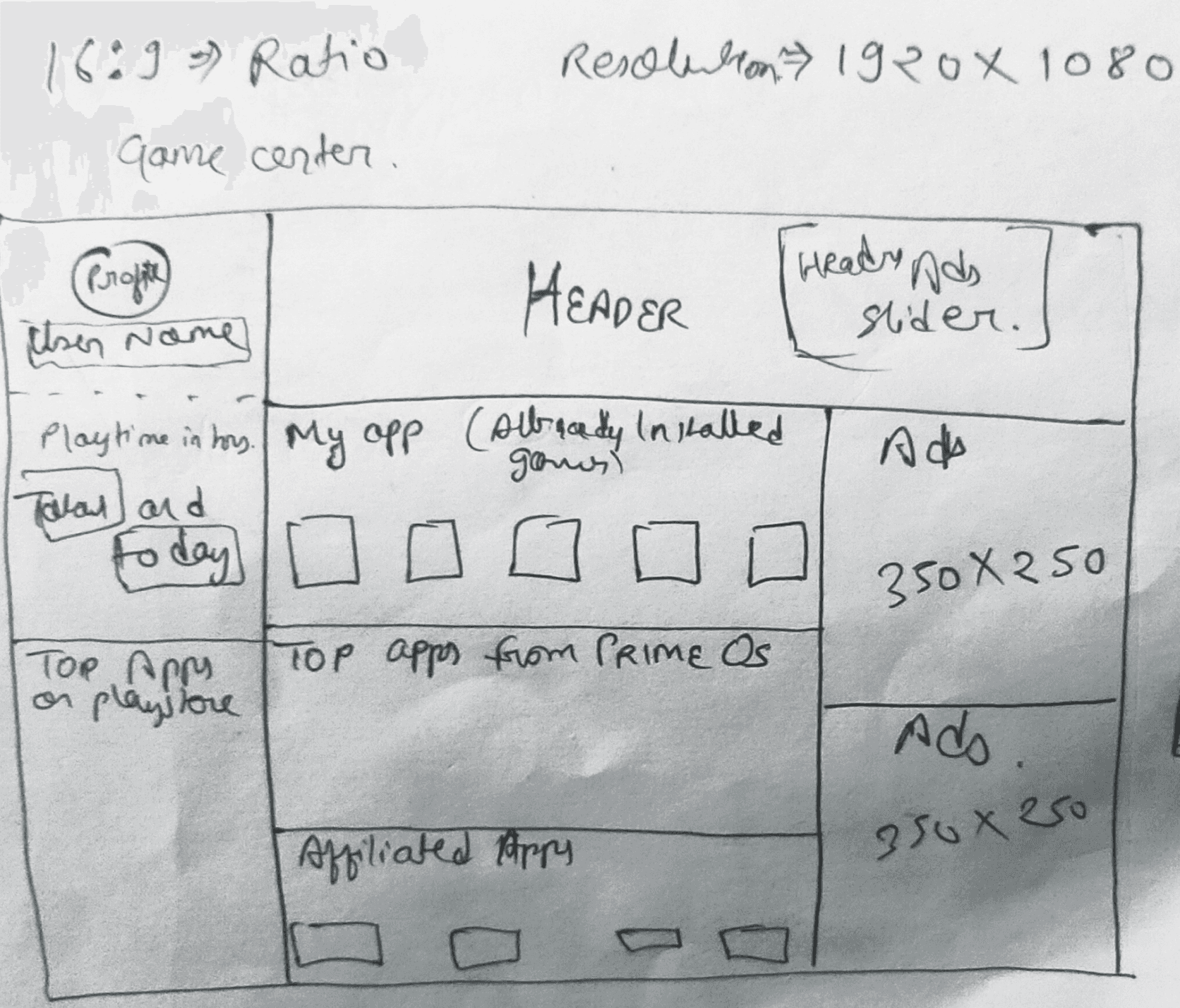
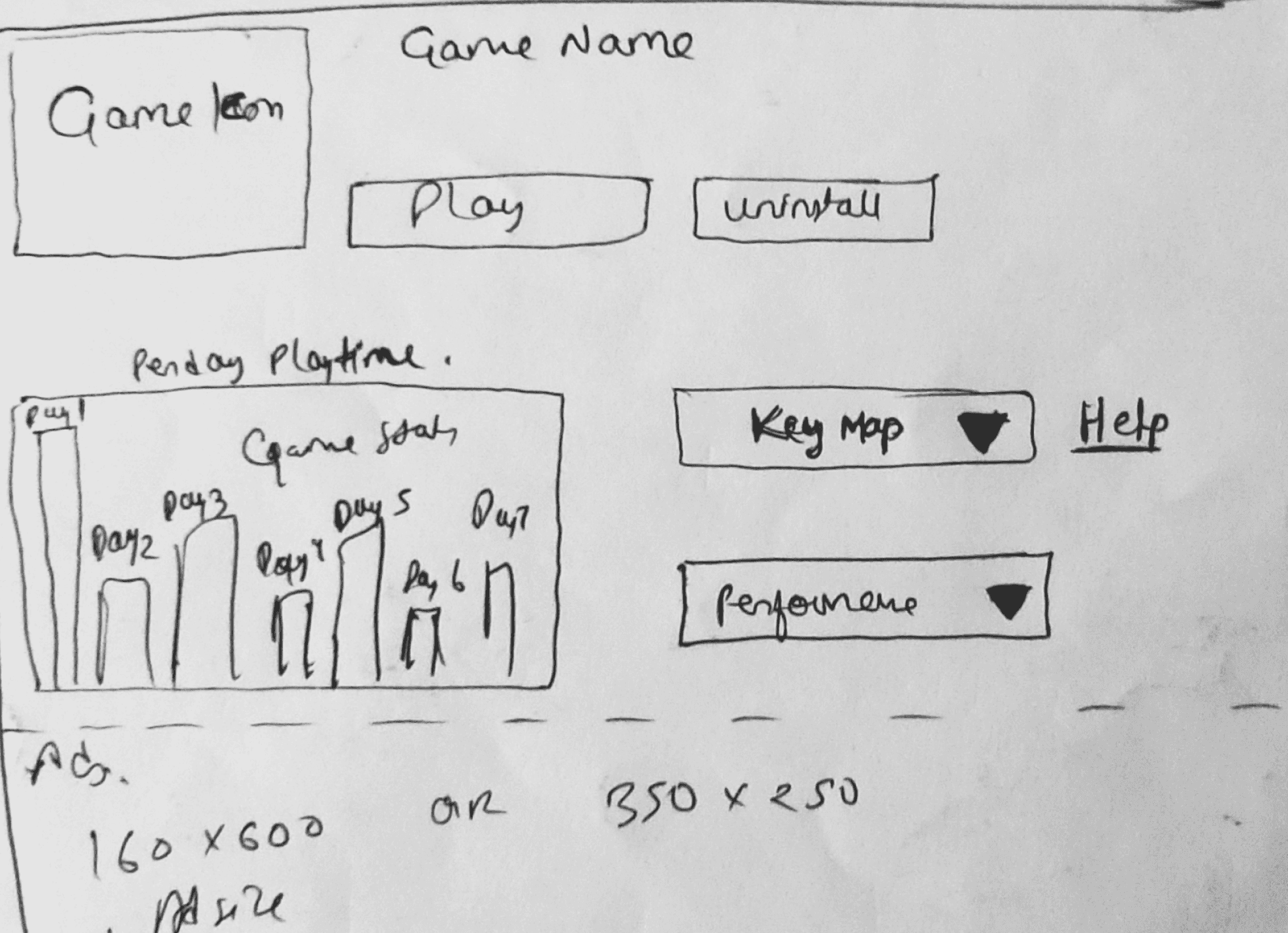
Unleashing the scientist and artist persona! 👨‍🔬

To pinpoint the exact focal point of the process we started conceptualizing and conducted several stakeholder interaction sessions. As a result, we identified additional attributes and functionalities to include, such as required screen resolution, ad section measurements, a chat window, and the online connect feature."
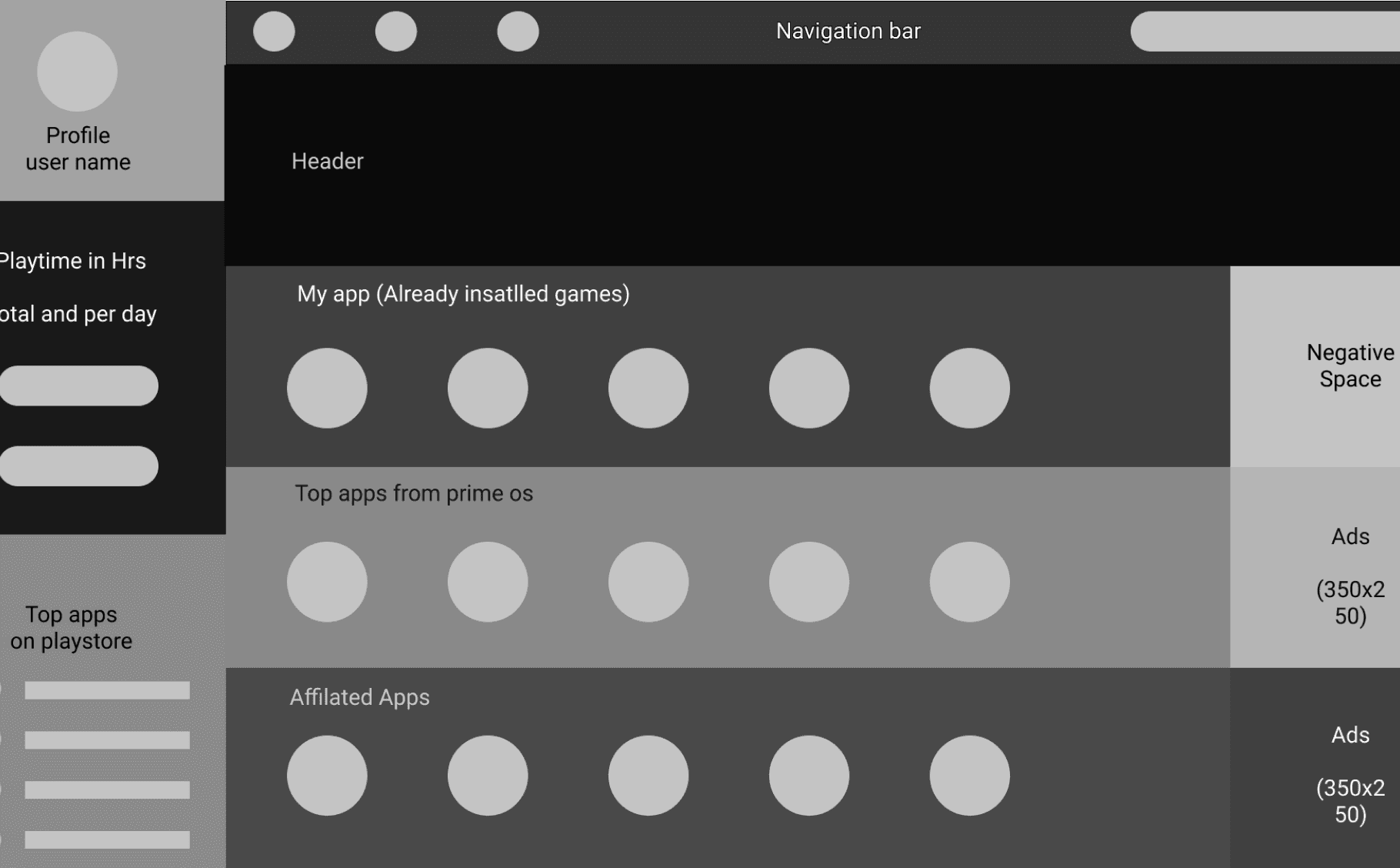
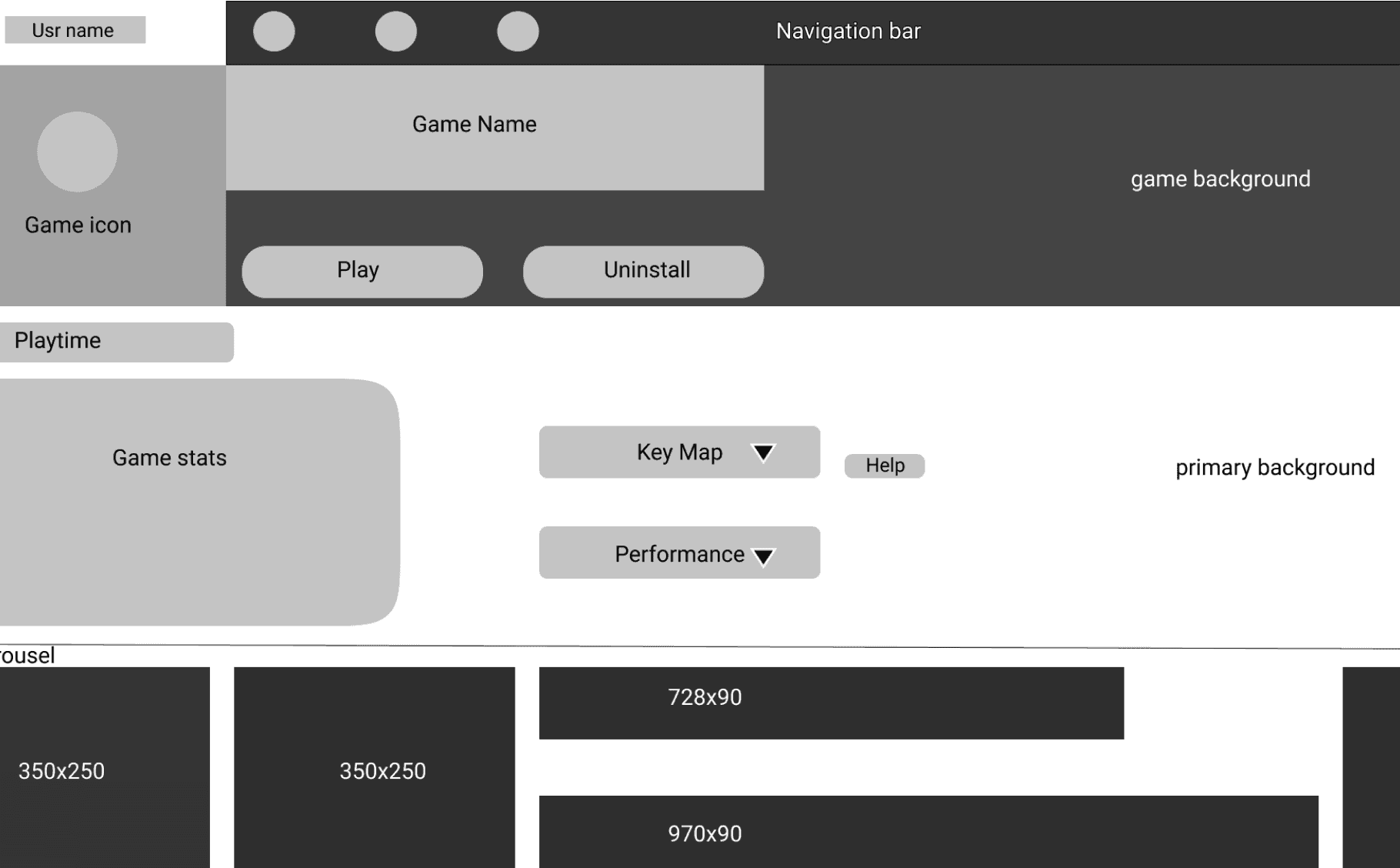
Giving essence of life to our concepts ‍🔬

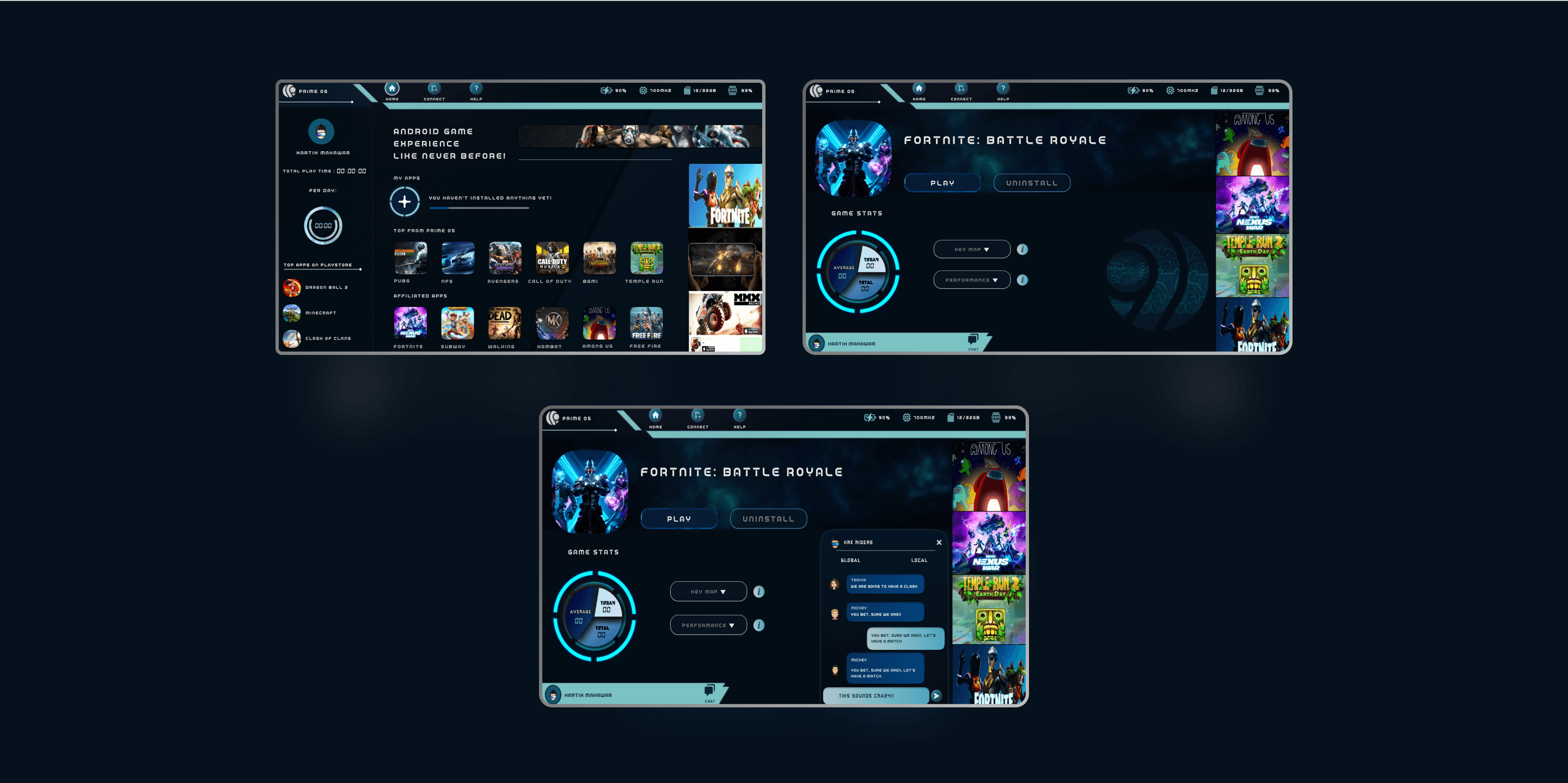
After several interactions we managed to align our requirements and design concepts and build the wireframes.
Game center goes live! 🫡

To assess its impact, Game center was initially launched to a restricted audience comprising 10% of users. This enabled us to meticulously track its performance and refine as needed. Implemented as an exploratory experiment to gather in depth insights for future remodeling.

To assess its impact, Game center was initially launched to a restricted audience comprising 10% of users. This enabled us to meticulously track its performance and refine as needed. Implemented as an exploratory experiment to gather in depth insights for future remodeling.

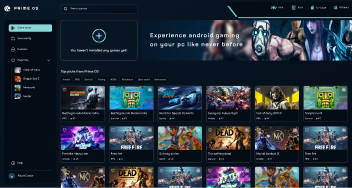
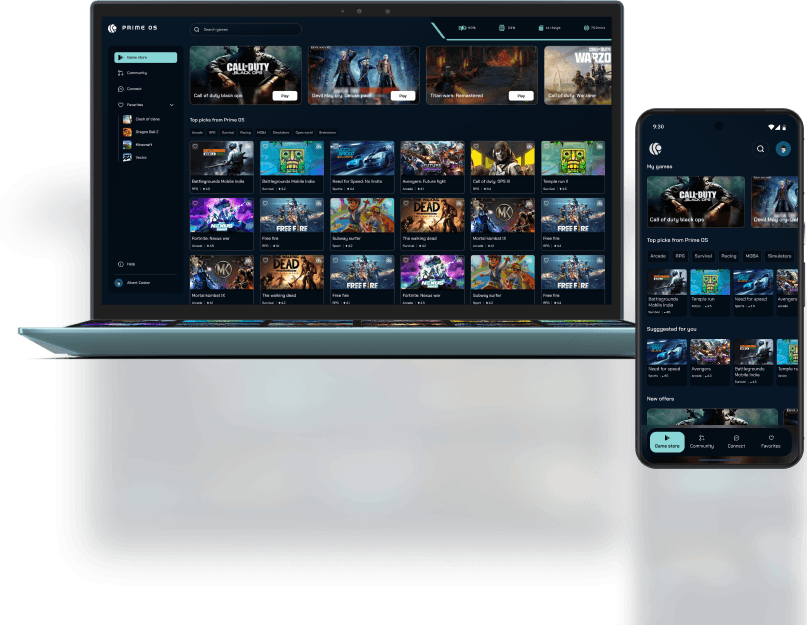
And Here comes the Game center v1.0 🎮
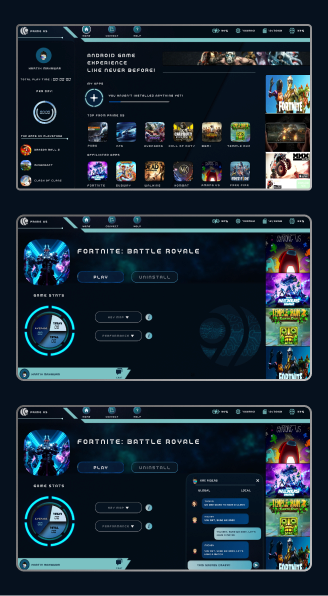
What were the results?

After the launch of Game Center, we anticipated a significant surge in user engagement and retention rate due to our enhanced game recommendations and seamless experience (atleast that's what we thought😅). While we expected some skepticism in adoption rate due to barrier of installing new operating system on PC's to run game center, we were counting on increase in time spent rate. However, to our surprise the reality was quite different.

74%

Users loved the gaming theme based UI and subtle ad positioning space.

55%

Users found system stats such as battery, ram usage and memory usage insightful.

80%

Users appreciated the chat and community feature.

30%

Users find navigation bit confusing

80%

Users expected game Wishlist feature

67%

Users find game stat graph complex and of less use due to lack of in-depth contextual data.

42%

Heavy game users finds it necessary to have cross device synchronization i.e. they require a mobile version.

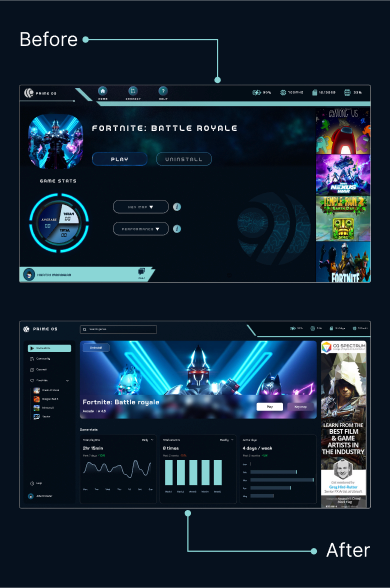
Remodeling game center for our users 🛠️

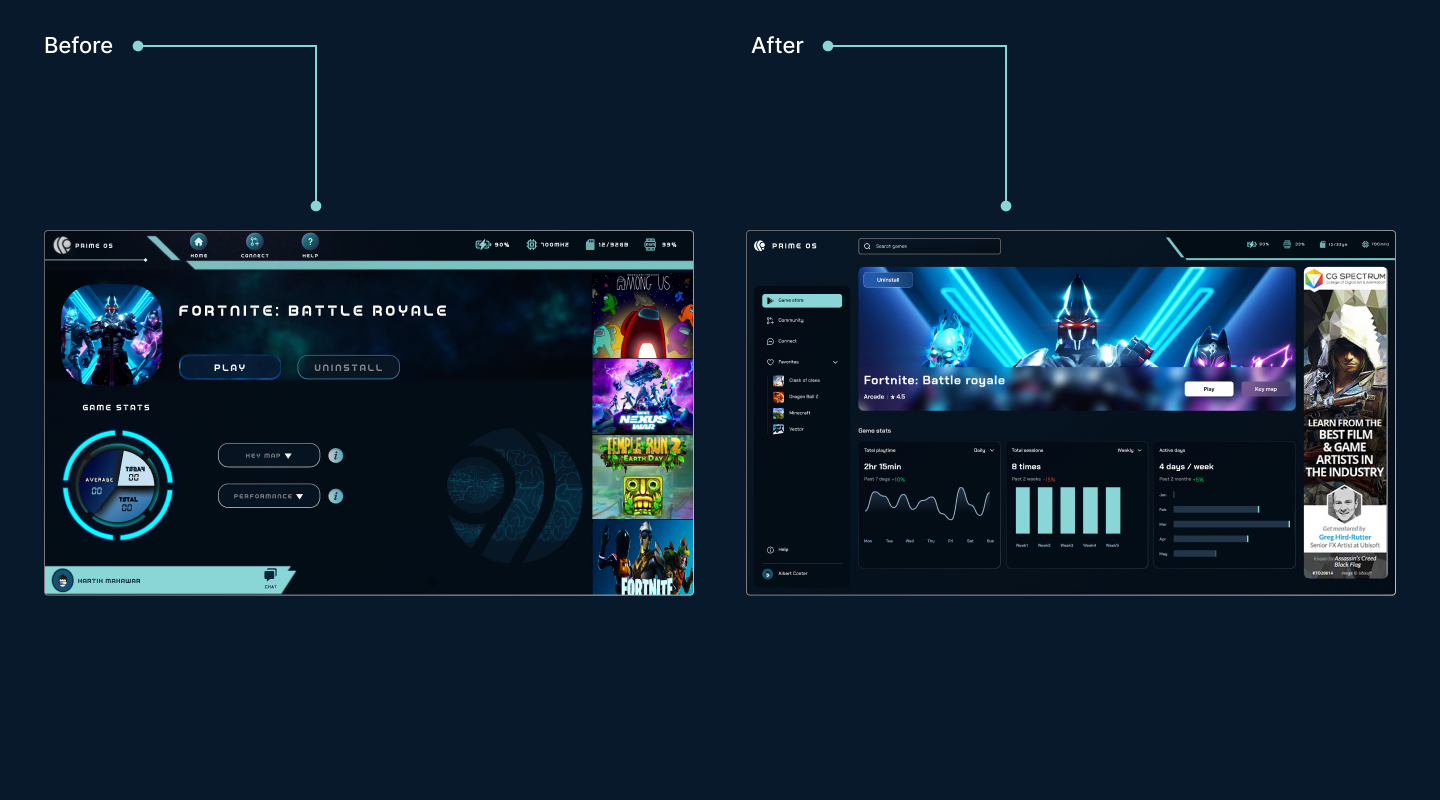
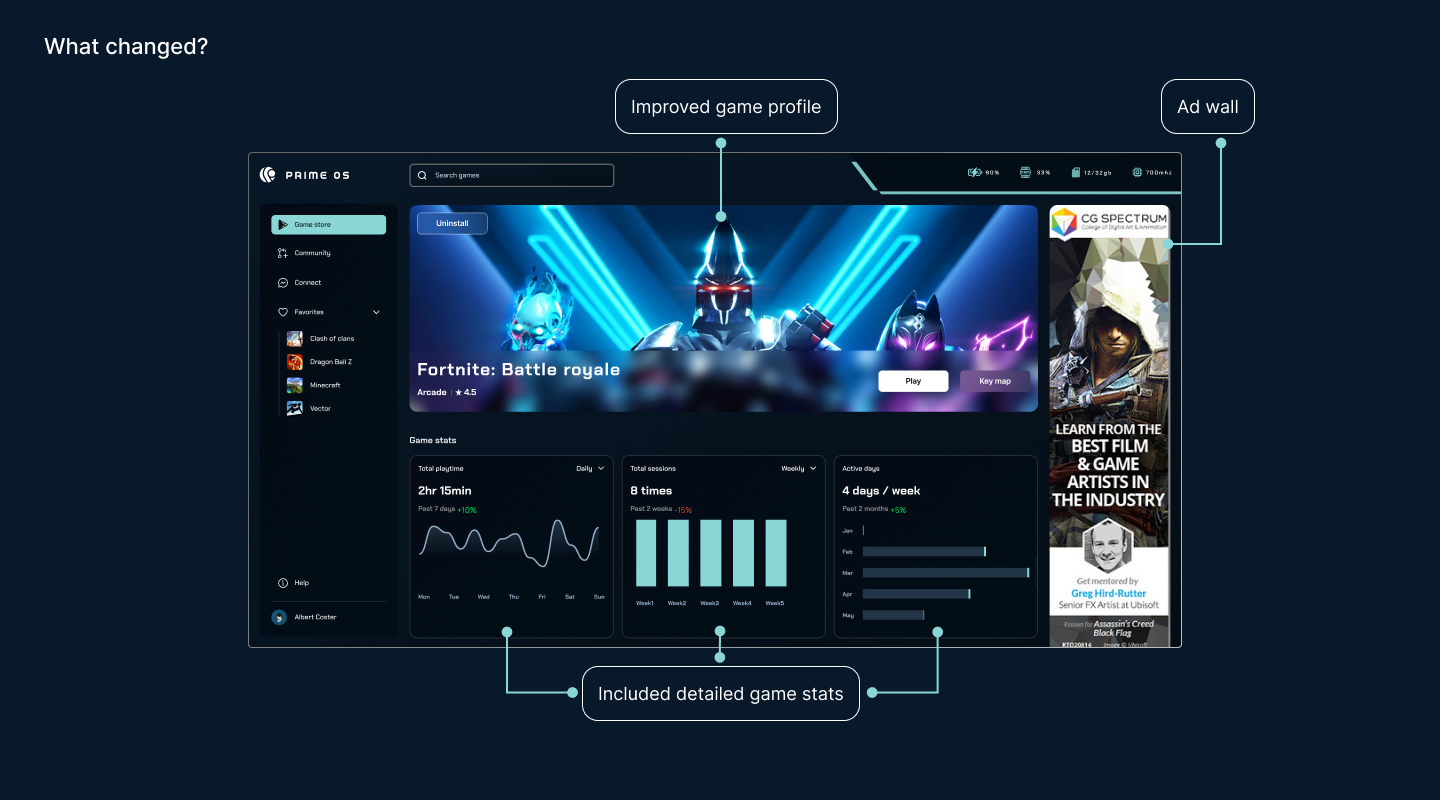
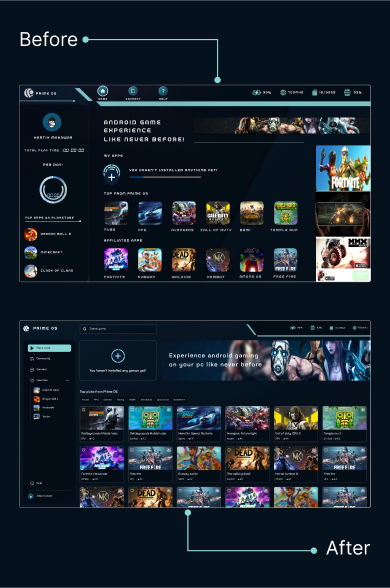
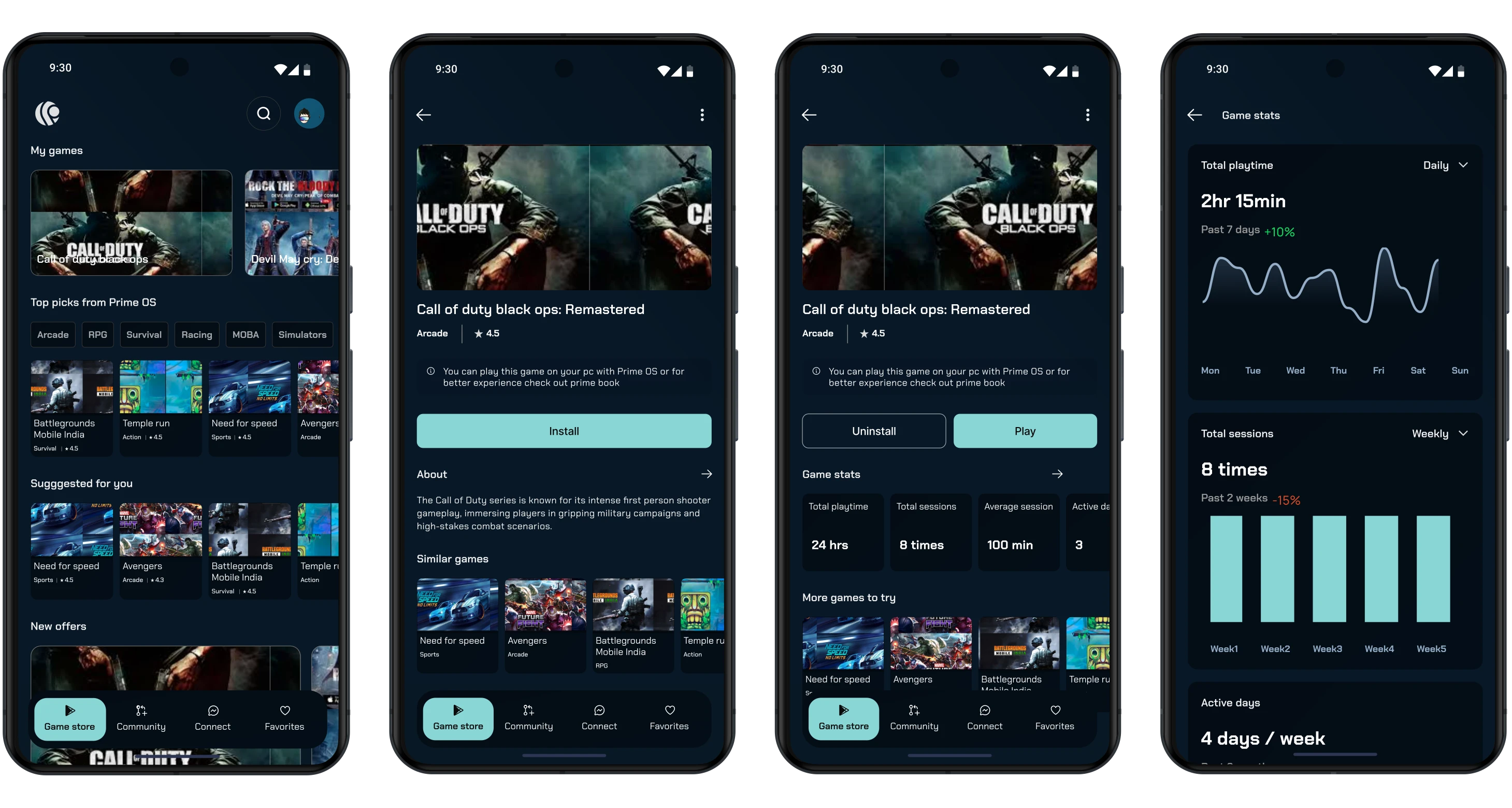
After analyzing user feedback, we clarified our goals and expanded the scope, added new features to improve user interaction and resolved UX issues from the previous version.
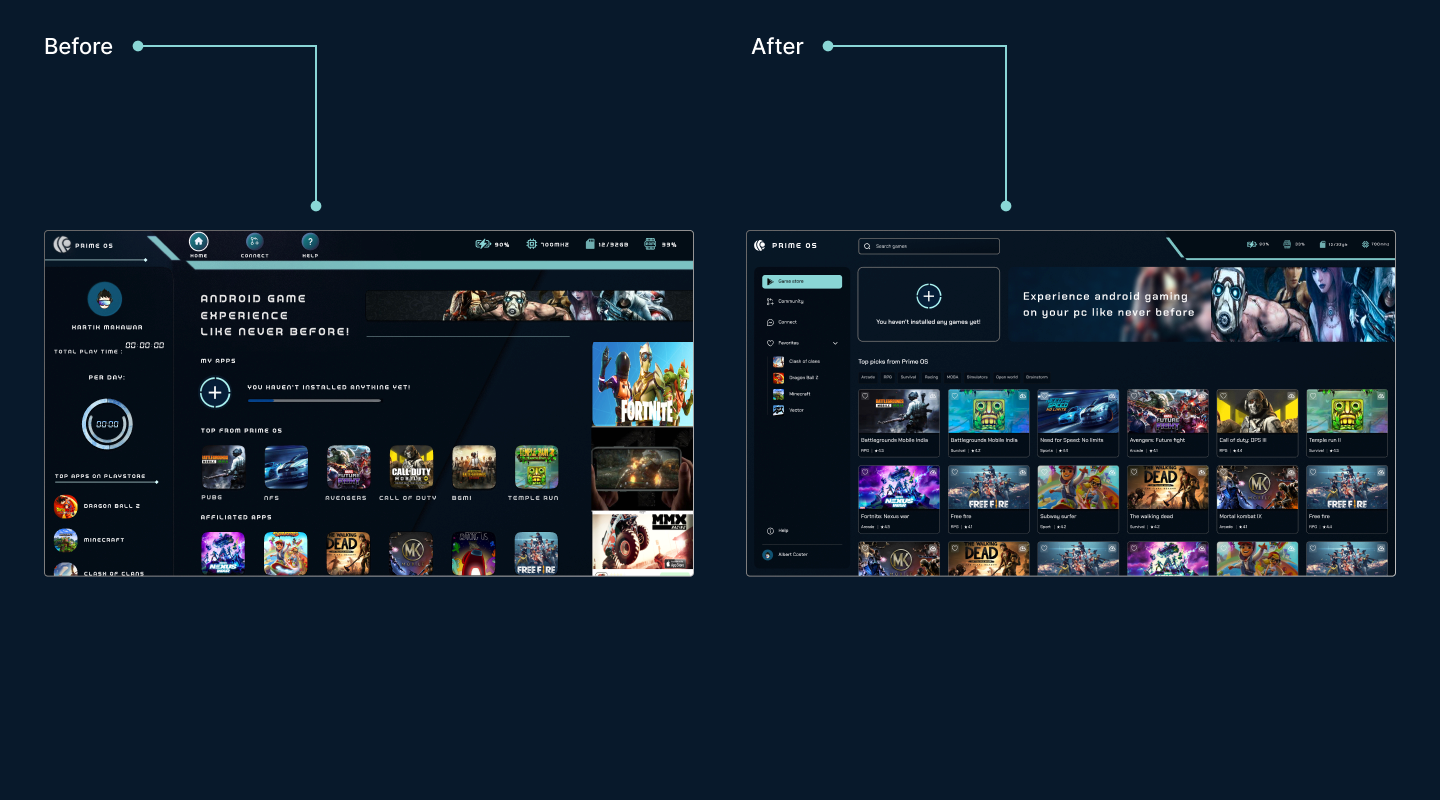
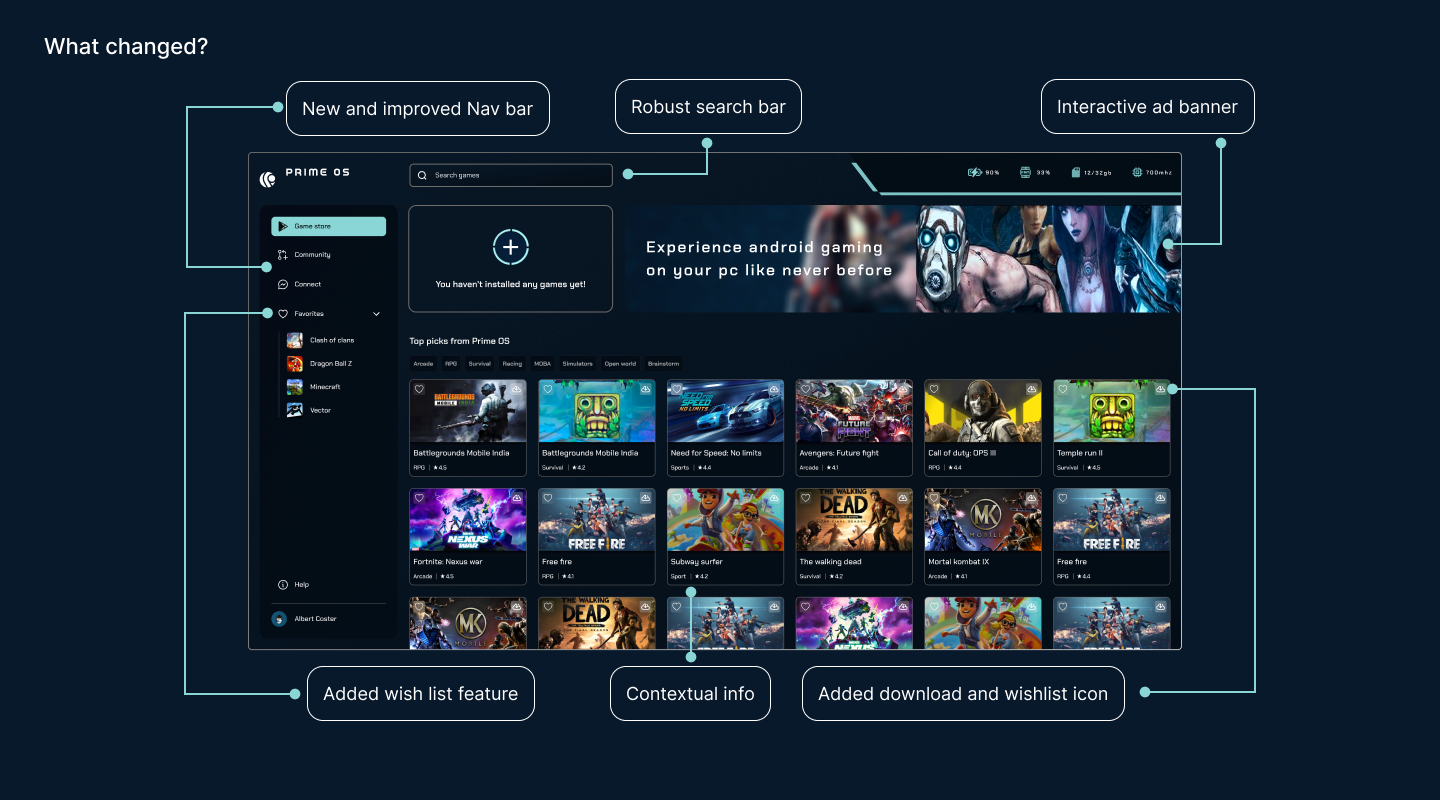
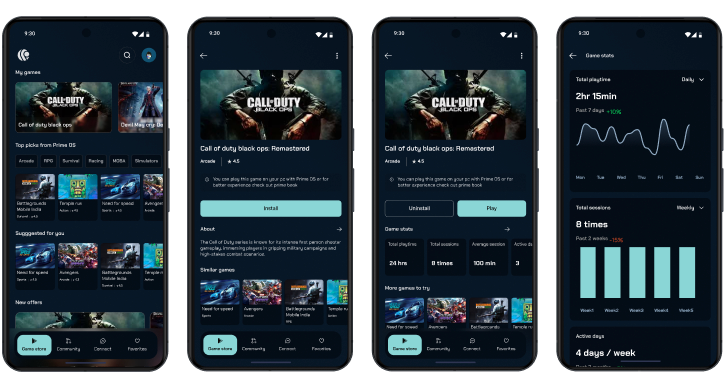
Have a sneek peak at Game center v1.1😶‍🌫️

We were all set to roll out the updated version and decided to follow the same thoughtful approach as last time. Instead of rushing into a full release, we launched it to a smaller, focused group—just 15% of our user base. We focused on scouting—user behavior patterns, performance, task completion rates, engagement time, and a few other key metrics.

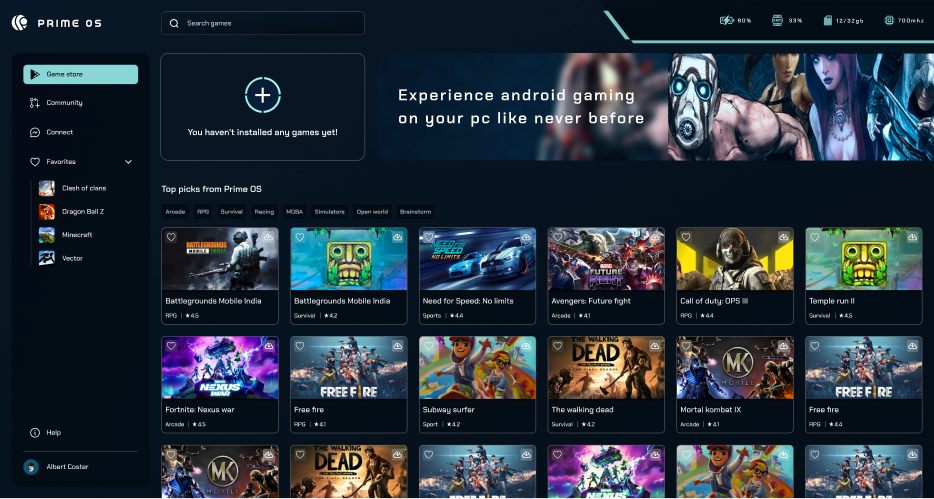
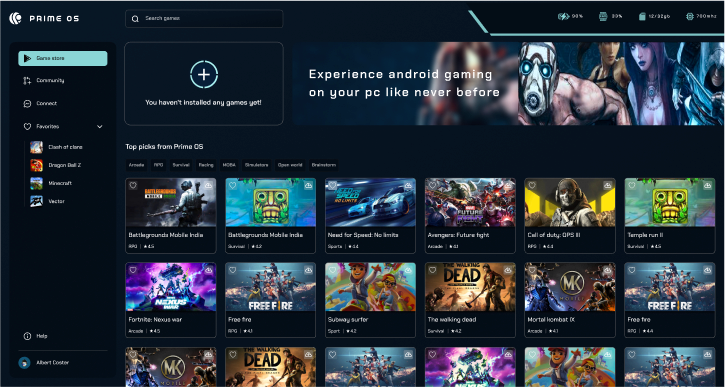
Store

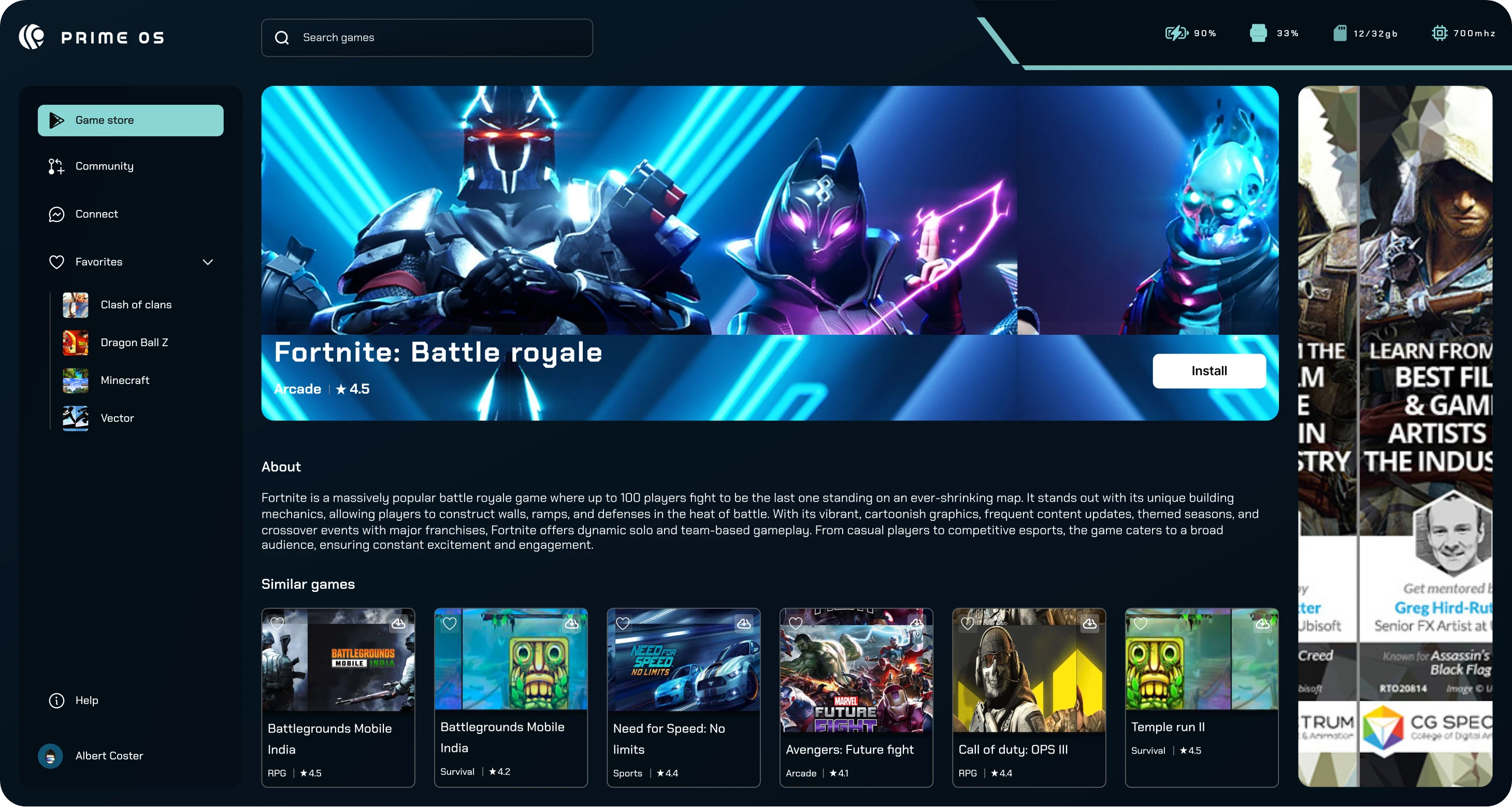
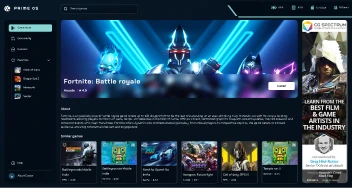
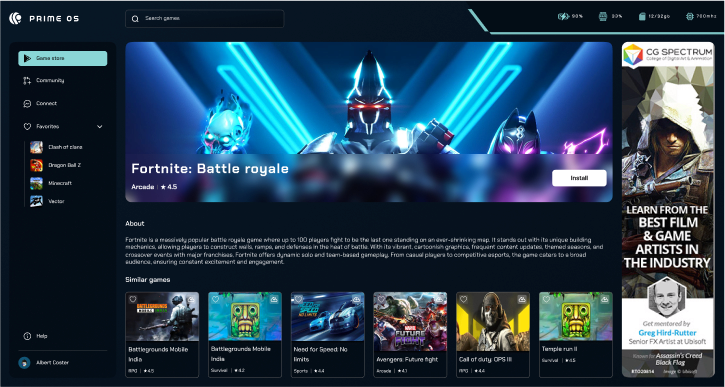
Game profile

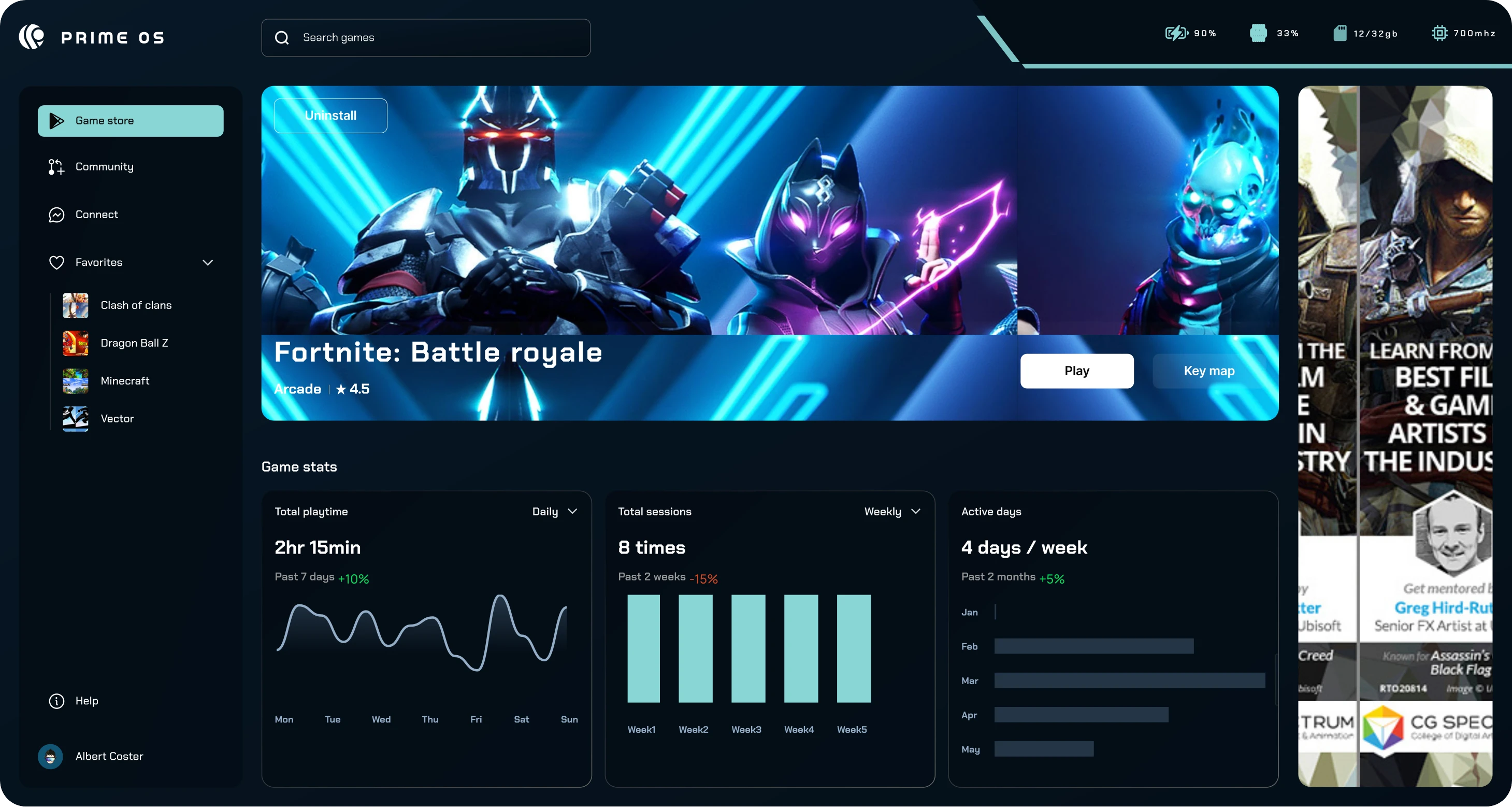
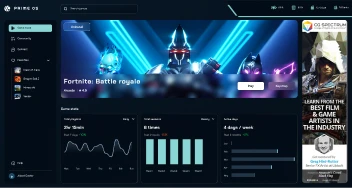
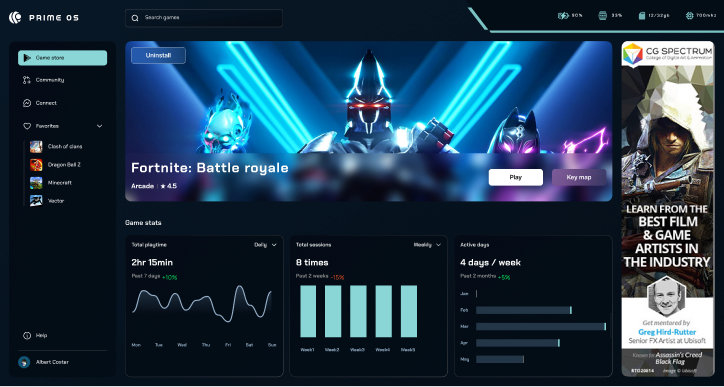
Game stats

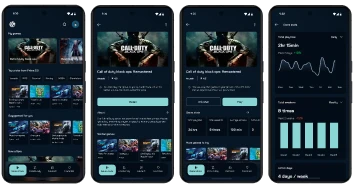
Mobile view

Store

Game profile

Game stats

Mobile view

Store

Game profile

Game stats

Mobile view

Store

Game profile

Game stats

Mobile view

Impact of the revamp

This time we entered with subtle expectations (Not gonna repeat last time’s mistake😂) and the results were quite promising and overall impact was positive.

84%

user satisfaction score on the scale of 20 average user.


user satisfaction score on the scale of 20 average user.

User satisfaction score on the scale of 20 average user.

40%

Users found new version of game center a better alternative for Bluestacks and NoX player

Users found new version of game center a better alternative for Bluestacks and NoX player.

12%

Increase in user session duration with average session being 45 minutes

8%

Increase in downloads of PrimeOS

Core learnings

1.

Gaming UX

Balancing Simplicity with Advanced Features is Key in Gaming UX as it follows slightly different focus areas then general UX.

2.

Different mental models

Gaming UX evoke emotions through highly intuitive interface while general UX minimizes frustration by prioritizing clarity and ease of use.

3.

Data-Driven Design

Integrating data from user research and usability tests into design decisions allowed us to build a product that truly met user needs. By relying on insights gathered through surveys and feedback.

4.

Cross-Functional Execution & Planning

Building the Game Center from scratch required meticulous planning, agile sprints allowed us to adapt quickly, especially when integrating performance-related design adjustments.

Shout out!

A huge thanks to everyone involved in the process from getting to go- managers, engineers everyone. Furthermore, congratulations to Primebook for getting featured in “Shark Tank India”.

Hey you made to the end! Thanks for giving your time if you need to know more about my approach and how I informed and took design decisions, please feel free to reach out to me.😄

Have a sneek peak at Game center v1.1😶‍🌫️

We were all set to roll out the updated version and decided to follow the same thoughtful approach as last time. Instead of rushing into a full release, we launched it to a smaller, focused group—just 15% of our user base. We focused on scouting—user behavior patterns, performance, task completion rates, engagement time, and a few other key metrics.

Store

Game profile

Game stats

Mobile view

Impact of the revamp

This time we entered with subtle expectations (Not gonna repeat last time’s mistake😂) and the results were quite promising and overall impact was positive.

84%

user satisfaction score on the scale of 20 average user.

40%

Users found new version of game center a better alternative for Bluestacks and NoX player

12%

Increase in user session duration with average session being 45 minutes

8%

Increase in downloads of PrimeOS

Core learnings

1.

Gaming UX

Balancing Simplicity with Advanced Features is Key in Gaming UX as it follows slightly different focus areas then general UX.

2.

Different mental models

Gaming UX evoke emotions through highly intuitive interface while general UX minimizes frustration by prioritizing clarity and ease of use.

3.

Data-Driven Design

Integrating data from user research and usability tests into design decisions allowed us to build a product that truly met user needs. By relying on insights gathered through surveys and feedback.

4.

Cross-Functional Execution & Planning

Building the Game Center from scratch required meticulous planning, agile sprints allowed us to adapt quickly, especially when integrating performance-related design adjustments.

Shout out!

A huge thanks to everyone involved in the process from getting to go- managers, engineers everyone. Furthermore, congratulations to Primebook for getting featured in “Shark Tank India”.

Hey you made to the end! Thanks for giving your time if you need to know more about my approach and how I informed and took design decisions, please feel free to reach out to me.😄

Create a free website with Framer, the website builder loved by startups, designers and agencies.